Email: info@xtar.cc New Arrivals→
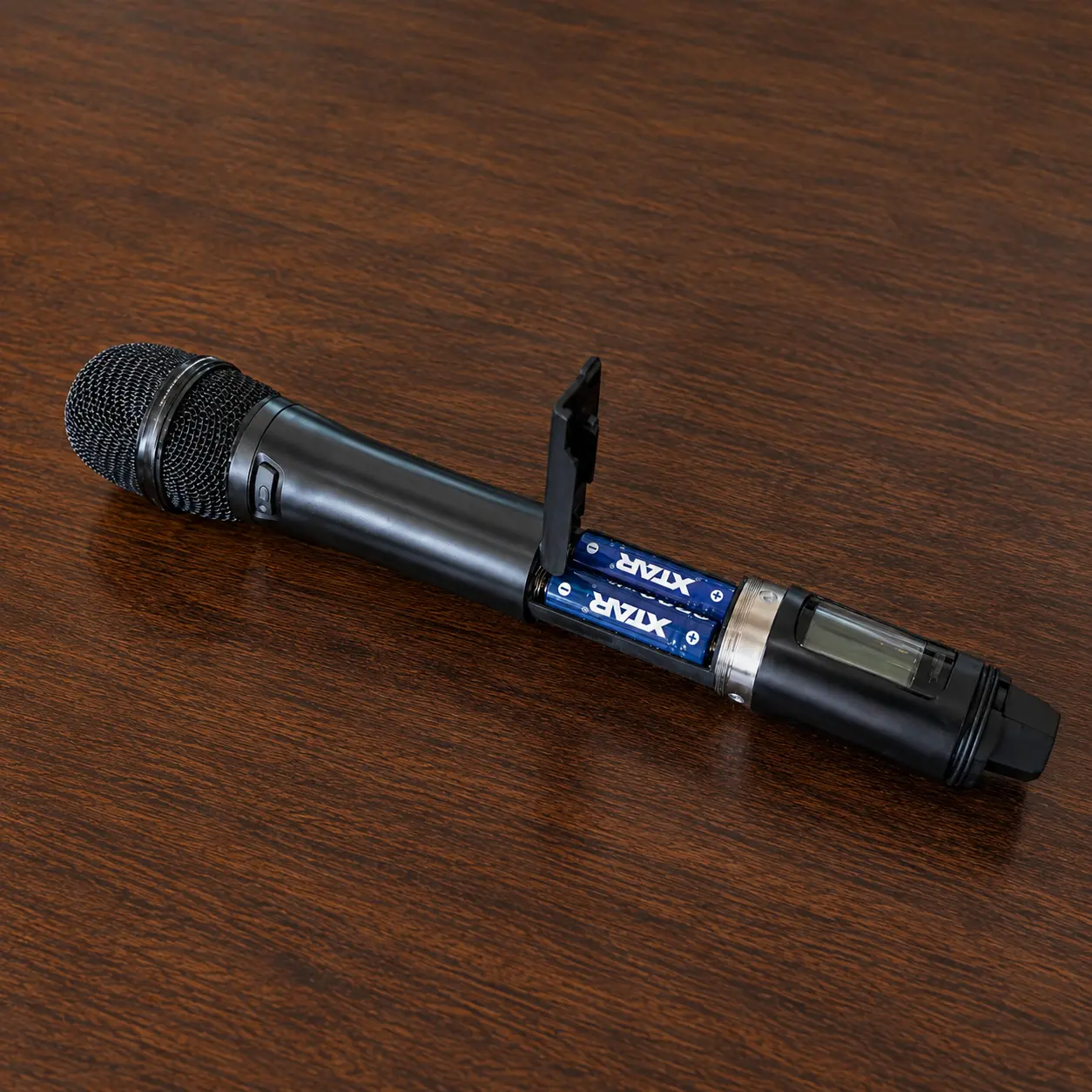
Handheld Wireless MicrophonesWireless microphone batteries for live vocal and speaking setups

Email: info@xtar.cc New Arrivals→
Rechargeable wireless microphone batteries, matched smart chargers and tested power options for handheld microphones, wireless transmitters, IEM bodypacks and portable receivers.
Compare XTAR AA lithium battery performance on Lectrosonics, Wisycom, Sennheiser, Shure and RodeLink equipment — and source standard or OEM products from one manufacturer.
From stage microphones and bodypack transmitters to IEM receivers and venue audio, wireless systems need reliable rechargeable power in different operating environments.

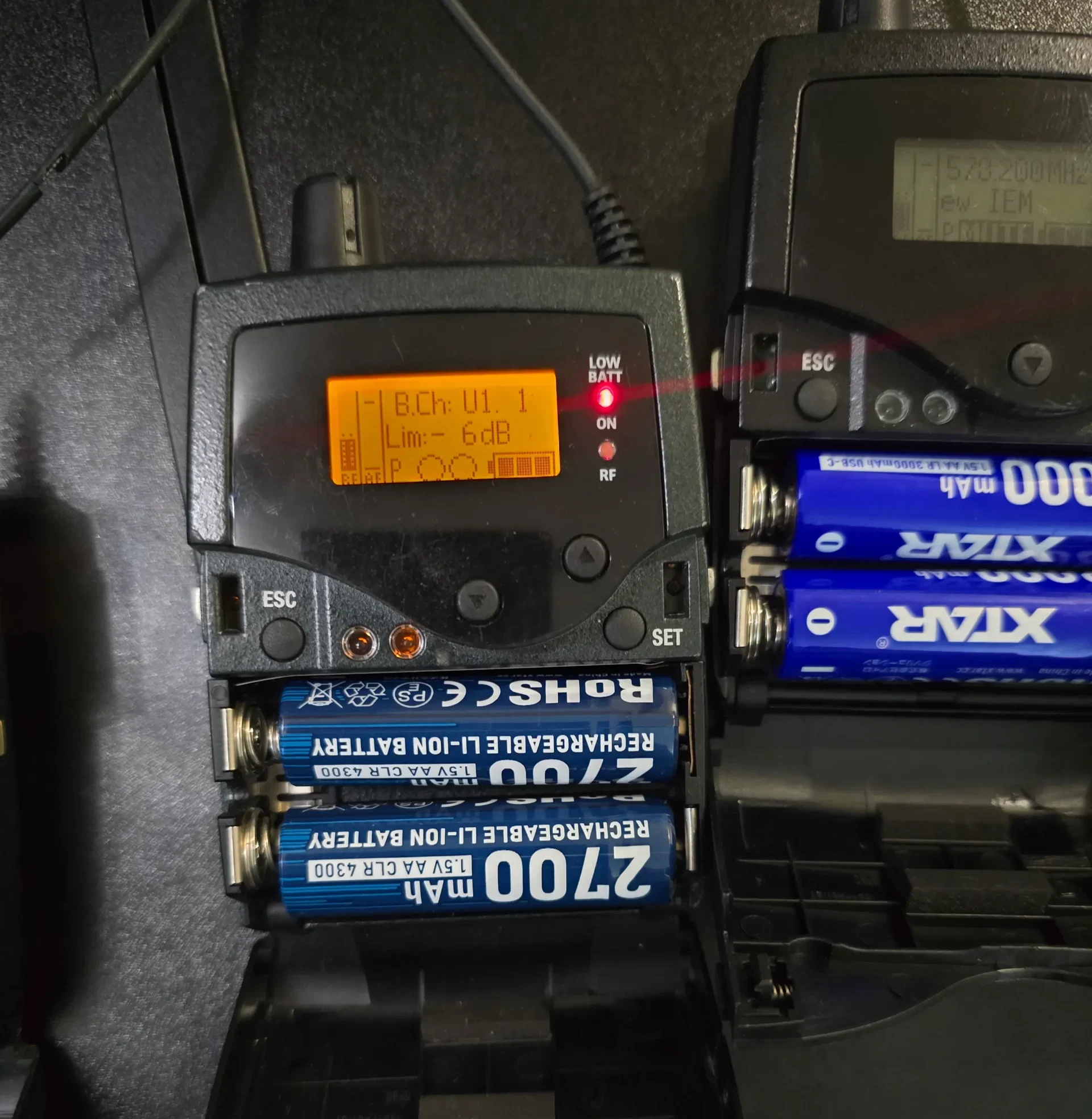
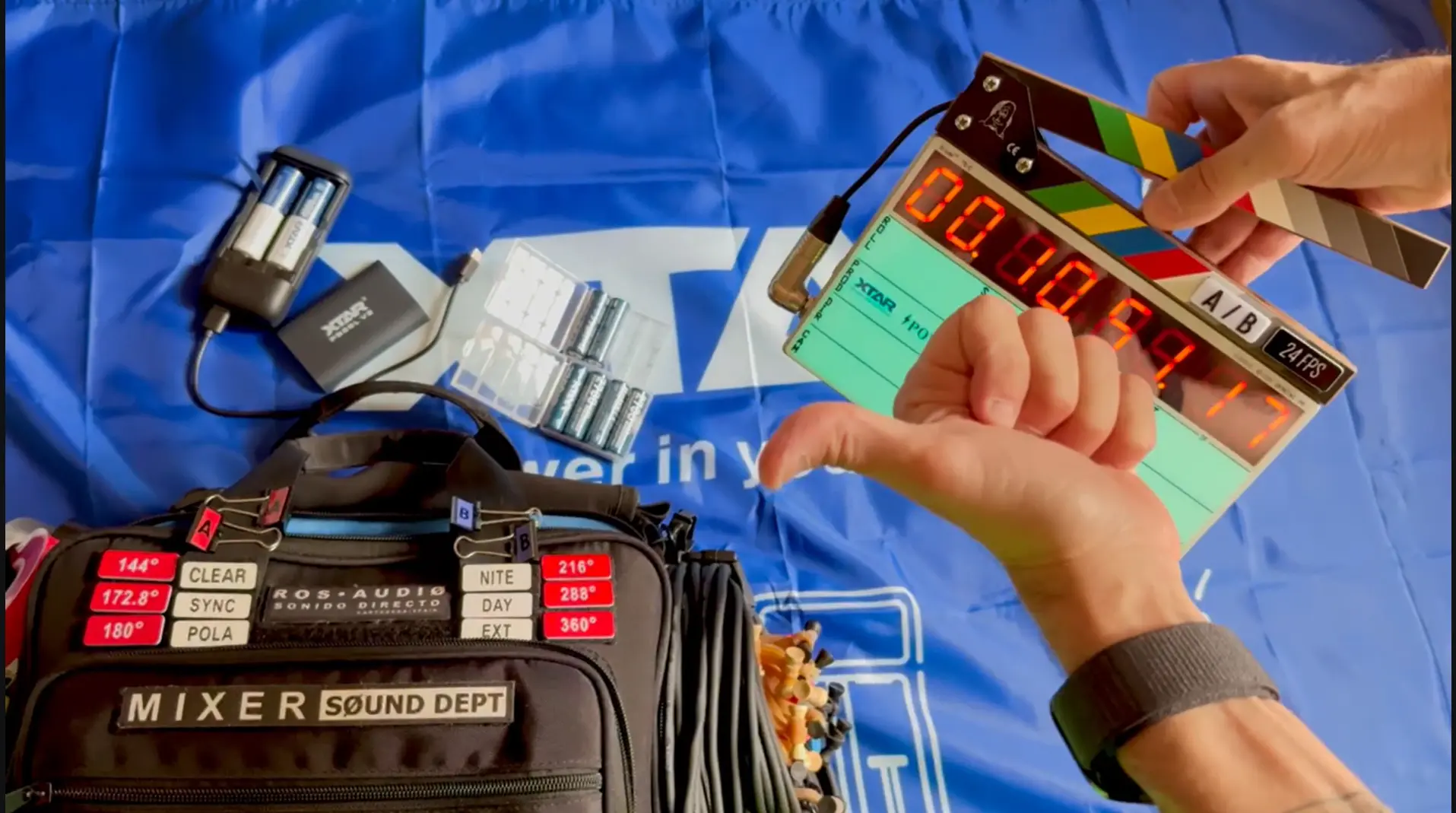
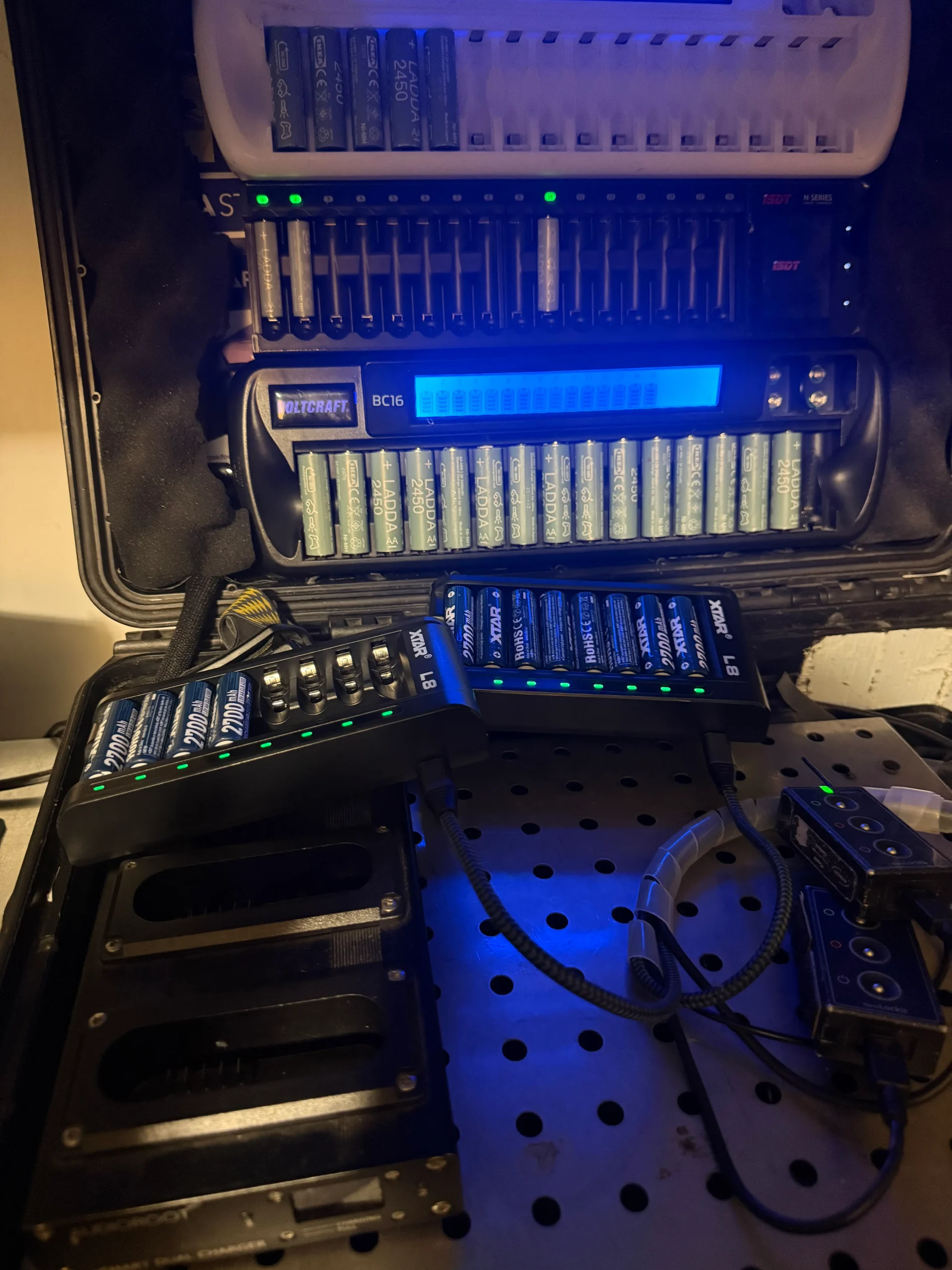
Rechargeable AA batteries for wireless microphones must do more than fit the compartment. In professional wireless audio systems, runtime, usable battery warnings and charging turnaround all affect equipment readiness.
RF output power and transmitter settings change how long a battery can run.
Warnings and remote battery-status readings must remain useful before shutdown.
Battery format, voltage, compartment clearance and battery-type modes vary by model.
Rental and production teams need charged spares and convenient multi-slot charging.
XTAR's main wireless microphone battery offering is rechargeable 1.5V lithium-ion AA, with more formats available for related wireless audio systems. We also supply selected 18650 and 14500 Li-ion batteries and 1.5V AAA batteries for equipment designed to use those formats. Choose by the specific device and its battery monitoring behavior, not by equipment category alone.
| Wireless Audio Equipment | Power & Compatibility Considerations | XTAR Battery Options |
|---|---|---|
| Handheld wireless microphones | AA format where supported; runtime and low-battery reading during performances | 1.5V AA rechargeable Li-ion; other formats only when specified by the device |
| Wireless bodypack / lavalier transmitters | RF output setting, battery telemetry and compartment fit | 1.5V AA as primary option; AAA or specified cylindrical Li-ion formats where applicable |
| Wireless IEM bodypack receivers | Operating duration, battery indication and replacement cycles | 1.5V AA/AAA for compatible receivers |
| Portable wireless receivers & IFB | Battery format, receiver status and long-session reliability | AA options; 18650/14500 for devices expressly designed for those cells |
Some devices use proprietary packs rather than replaceable cylindrical batteries. Verify chemistry, dimensions and device manufacturer guidance before substitution.
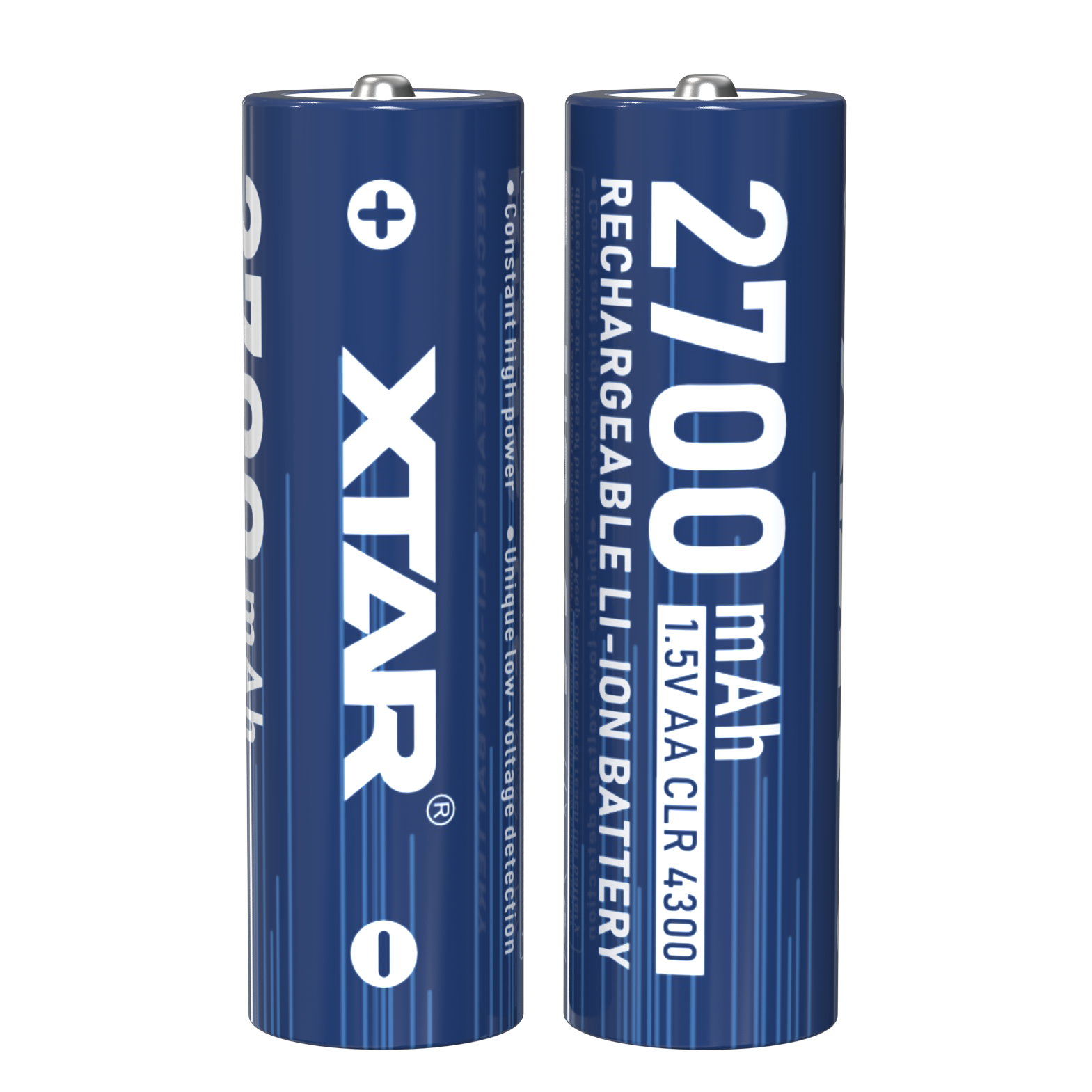
4300mWh / 2700mAh. Constant-voltage + linear discharge for applications needing higher voltage and a distinct low-battery warning.
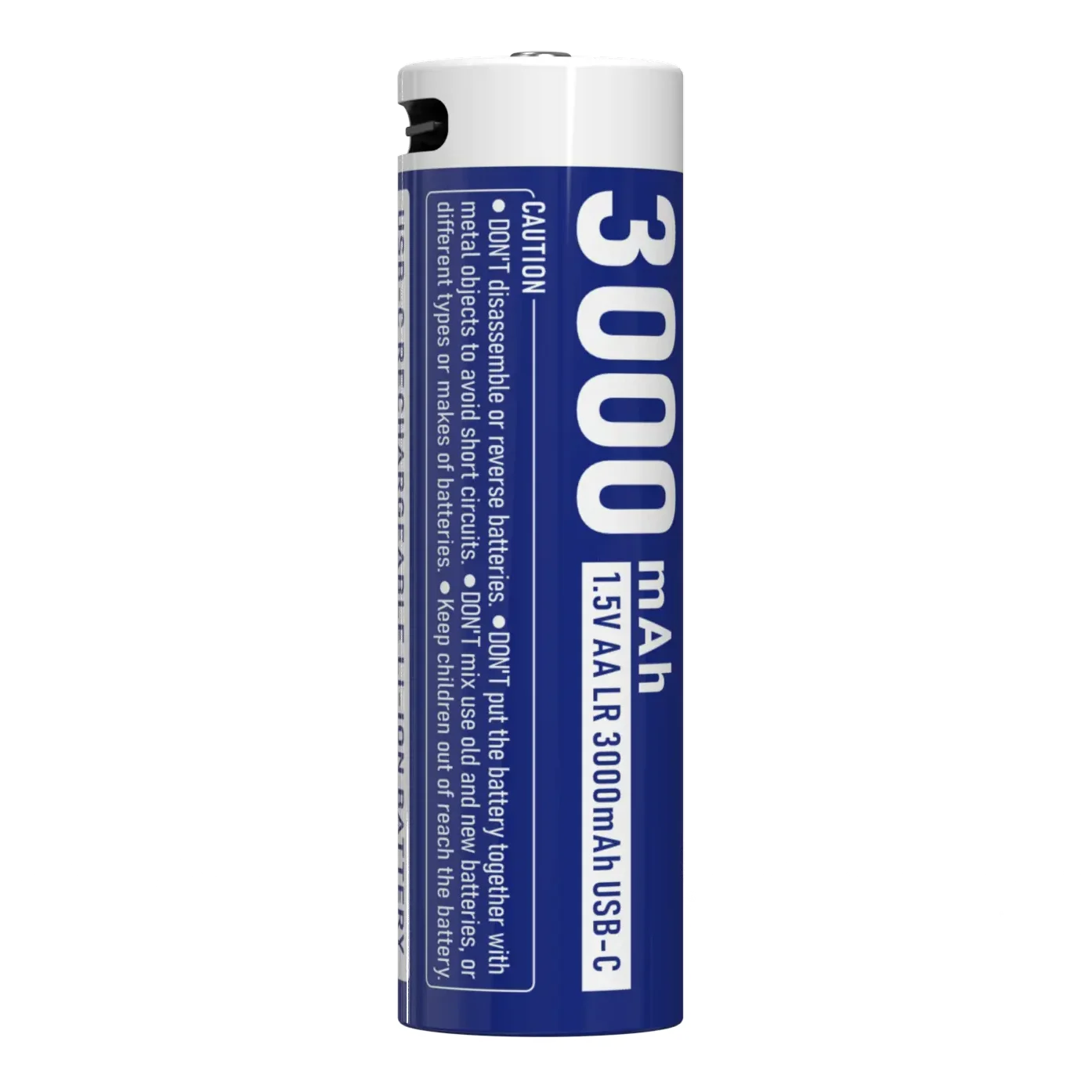
3000mAh. Pure linear discharge for long runtime and battery-level indication in compatible devices.
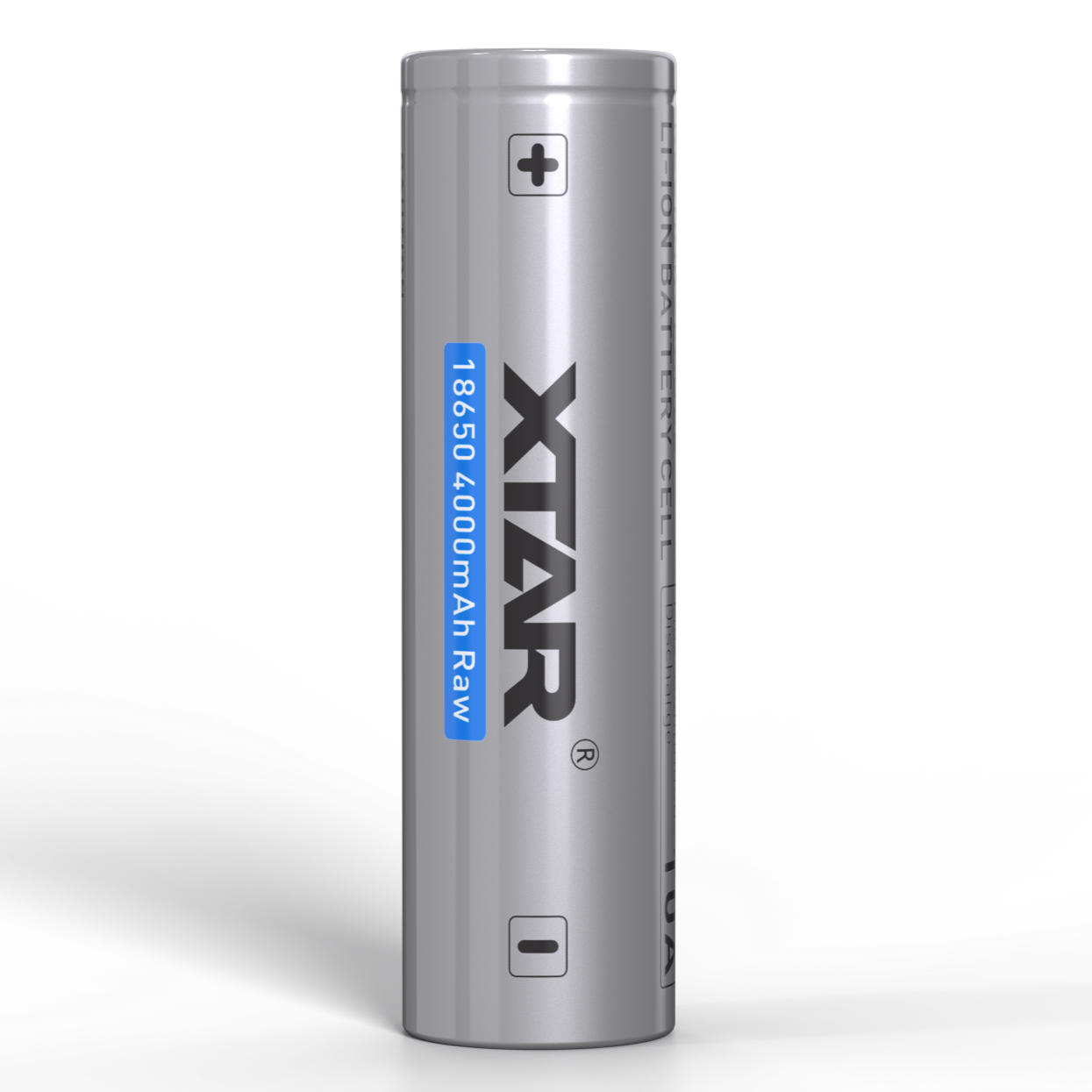
4000mAh raw 18650 cell with 10A continuous discharge. Unprotected, flat-top design for equipment with suitable built-in battery protection.
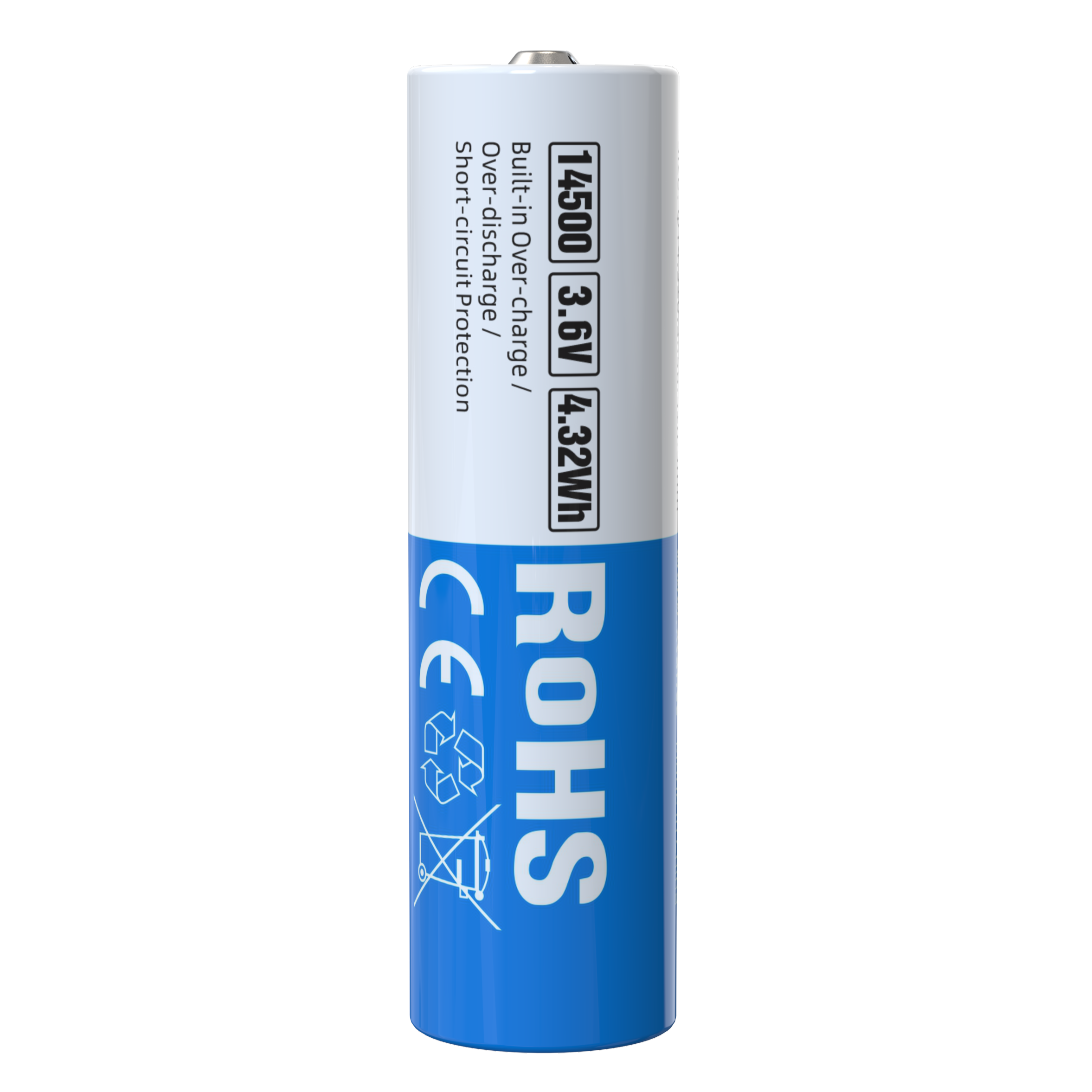
1200mAh protected 14500 cell with 2.5A maximum continuous discharge, for devices designed for this 3.6V battery format.
Two AA discharge behaviors: CLR 4300 is designed for high voltage with a recognizable low-battery warning; LR 3000 for extended runtime with a more gradual battery indication. Actual meter behavior depends on equipment and settings.
For production sound, venue and rental teams, charging efficiency means fewer chargers to manage, visible battery status and faster preparation of spare sets. XTAR's independent-slot charging supports efficient battery rotation, while TC-CC-CV for Li-ion, CVSA for Ni-MH and low-voltage activation help manage charging safely and protect battery service life.
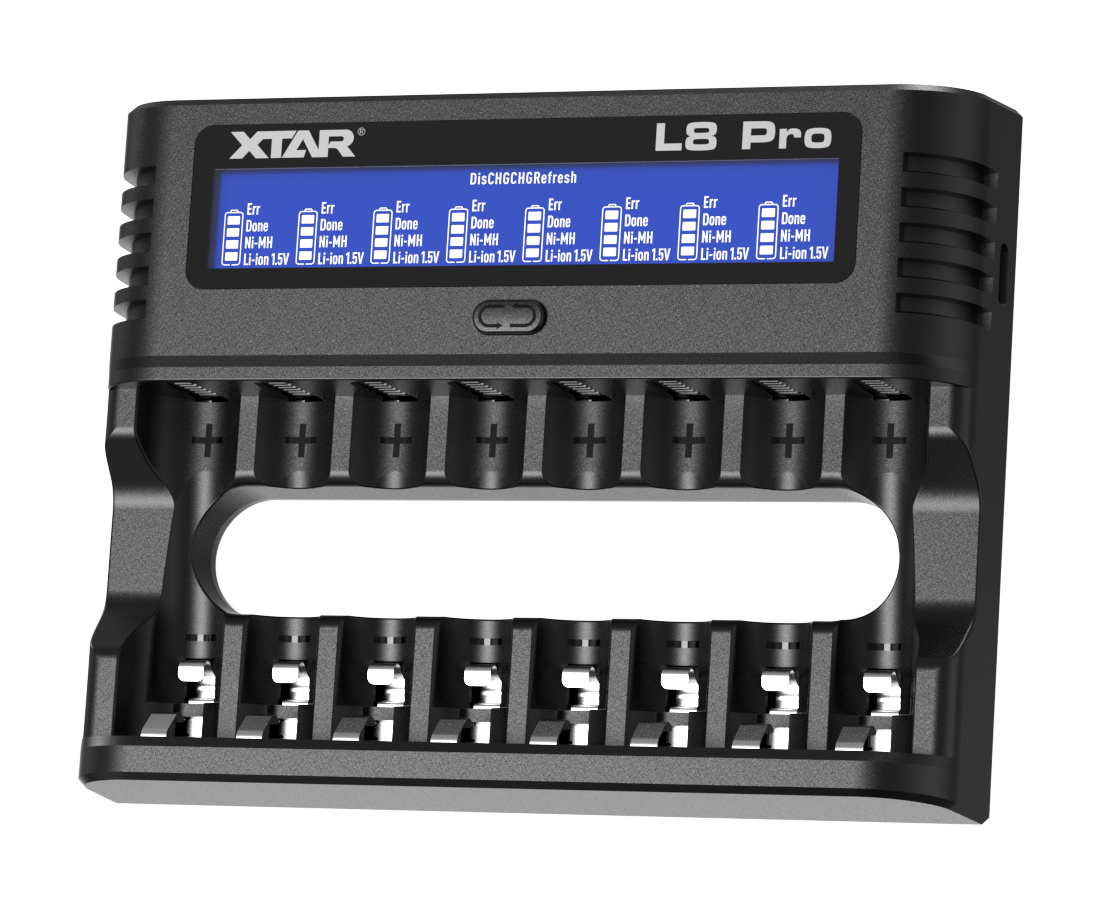
For teams primarily operating rechargeable 1.5V Li-ion and 1.2V Ni-MH AA/AAA batteries.
View product ↗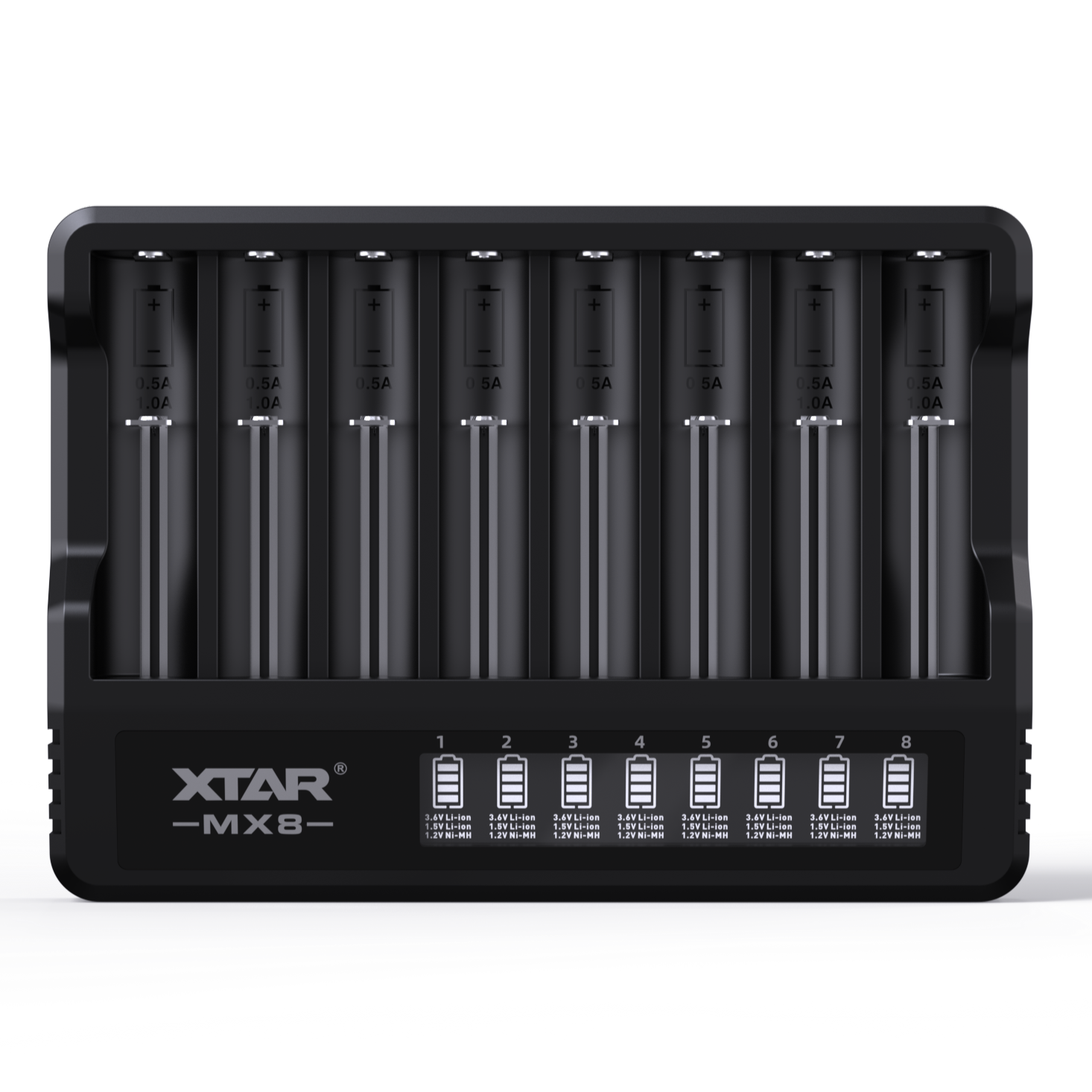
For teams combining rechargeable AA/AAA with compatible 3.6V/3.7V cylindrical Li-ion formats.
View product ↗| Comparison | L8 PRO | MX8 |
|---|---|---|
| Slots & chemistries | 8 · 1.5V Li-ion & 1.2V Ni-MH AA/AAA | 8 · AA/AAA 1.5V Li-ion, 1.2V Ni-MH, 3.6/3.7V Li-ion |
| Key features | LCD; independent slots; Ni-MH refresh; low-voltage activation | LCD; independent slots; mixed-size charging; low-voltage activation |
| Per-slot charging current | 1.5V Li-ion: 0.5A×6 / 0.38A×8; Ni-MH: 0.5A×8 | 3.6/3.7V: 1A×4 / 0.5A×8; 1.5V Li-ion & Ni-MH: 0.5A×8 |
| Typical full-charge time | Depends on battery and number of occupied slots; confirm by battery model | Depends on battery chemistry, capacity and slots; confirm by battery model |
| Best suited for | AA/AAA-based wireless microphone setups | Mixed wireless audio battery inventories |
Charging performance depends on compatible battery models, condition and power supply. Neither charger supports every battery size or every low-voltage recovery scenario.
XTAR rechargeable AA batteries have been evaluated on wireless handheld microphones, bodypack transmitters, IEM receivers and portable audio receivers. The tables below preserve the actual battery models, RF settings and competing brands so commercial buyers can compare evidence rather than marketing claims.
This group includes a documented Sennheiser handheld microphone setup plus other wireless microphone reports where the exact model or form factor was not supplied by the reviewer.
| Equipment / Test | Battery | Reported Result | Context / Source |
|---|---|---|---|
| Sennheiser wireless handheld mics | XTAR CLR 4300 & LR 3000 | Both microphones still showed 3 bars after a church service | Reviewer separately described previous alkaline use at ~4h. The TeleDynes ↗ |
| Phenyx Pro wireless microphone | XTAR CLR 4300 | 20h reported runtime | Medins Make Music ↗ |
| Wireless microphone (model not specified) | XTAR LR 3000 USB-C | 18h reported runtime | Church audio use. logicalworship ↗ |
| Wireless microphone (model not specified) | XTAR LR 3000 USB-C | 11h reported runtime | Medins Make Music ↗ |
For bodypack and professional wireless transmitter batteries, the strongest available evidence is from multi-brand comparisons, different RF power settings and receiver battery telemetry.
Michael Wynne CAS compared four AA batteries on a Lectrosonics DBSM transmitter at specified RF output levels.
| Battery / Chemistry | 25mW Runtime | 50mW Runtime | Difference vs XTAR |
|---|---|---|---|
| Energizer Ultimate Lithium · single-use | 6h 35m | 4h 45m | +35m / +15m longer |
| XTAR CLR 4300 · rechargeable 1.5V Li-ion | 6h 00m | 4h 30m | Rechargeable benchmark |
| Panasonic Eneloop Pro · Ni-MH | 4h 30m | 3h 30m | XTAR +1h 30m / +1h |
| IKEA LADDA 2450 · Ni-MH | 4h 20m | 3h 25m | XTAR +1h 40m / +1h 05m |
Source: Michael Wynne CAS video ↗ · Detailed four-brand transmitter comparison ↗
| Telemetry Test · DBSM / DSR4 | Warning Point | Shutdown | Reported Warning Window |
|---|---|---|---|
| LR 3000 · DBSM unit 1 | DSR4 yellow at 5h 08m | 6h 07m | ~59m from yellow |
| CLR 4300 · DBSM unit 2 | DSR4 yellow at 6h 05m | 6h 33m | ~28m from yellow |
Reported by Johnny Karlsson in separate tested DBSM units/runs at 25mW; shown to illustrate warning timing, not a controlled direct runtime ranking. The tester also found battery-type settings affect telemetry.
SoundDept.org tested CLR 4300 and LR 3000 at 20mW with different transmitter battery settings.
| Equipment | Battery | Lithium Setting | Alkaline Setting |
|---|---|---|---|
| Wisycom MTP40s | XTAR CLR 4300 | 13h | 18h |
| Wisycom MTP40s | XTAR LR 3000 | 15h | 18h |
| Wisycom MTP60 | XTAR CLR 4300 | 11h | 12h |
| Wisycom MTP60 | XTAR LR 3000 | Did not start | Did not start |
Source: SoundDept.org Wisycom test ↗
Sources: Jeff Loch / RodeLink ↗ · JW Sound / noise discussion ↗
These reviews document battery life and battery-status behavior in portable wireless receiving equipment, rather than assuming transmitter results apply equally to receivers.
| Equipment | Battery | Reported Field Result | Source |
|---|---|---|---|
| Wireless IEM bodypack | XTAR LR 3000 USB-C | 13h runtime | Medins Make Music ↗ |
| Shure SLXD5 portable receiver / IFB use | XTAR LR 3000 USB-C | About an 8–10h workday; battery displayed low around 8h | Jon Mendel ↗ |
| Shure SLXD5 portable receiver / IFB use | XTAR CLR 4300 | Typically replaced after 6–7h in the reviewer's workflow | Jon Mendel ↗ |
A separate reviewer, yahrmill, published battery runtime data for XTAR CLR 4300 across multiple transmitter models and settings. These are different device configurations and should not be compared as a controlled brand-to-brand ranking.
| Equipment / Setting | Reported CLR 4300 Runtime |
|---|---|
| Wisycom MTP60 · 50mW | 9.66h |
| Wisycom MTP60 · 100mW | 8.18h |
| Shure ADX3 · 2mW / 10mW / 35mW | 11.56h / 11.04h / 7.14h |
| Shure ULXD · display normal / ON | 17.47h / 15.79h |
| Sennheiser G4 · display ON / OFF | 12.63h / 15.02h |
| Sennheiser G3 · display ON / OFF | 17.35h / 23.68h |
| Audio Ltd · Low / Medium / High | 8.41h / 8.24h / 6.32h |
Three first-hand demonstrations complement the test tables above: a controlled transmitter comparison, church wireless microphone use and a wireless IEM battery test.
 Transmitters · Four-brand comparison
Michael Wynne evaluates XTAR CLR 4300 alongside Energizer, Eneloop Pro and IKEA LADDA, including different RF output settings.
 Handheld microphones · Church audio
The TeleDynes report battery indication after a worship service and compare their XTAR experience with previously used alkaline and Ni-MH cells.
 Wireless IEM · Runtime test
Medins Make Music reports 13 hours with XTAR LR 3000 USB-C in a wireless in-ear monitoring bodypack.
Videos are independently created reviewer content. Results apply to the equipment and settings used in each review. Click a video to watch it on YouTube.
Test methodology note: Results are third-party reports from particular devices and settings, not XTAR laboratory guarantees. Brand comparisons are shown only where a single tester compared the stated batteries in the same setup. Device model, RF output, display state, battery-type setting and cell count influence runtime. Some reviewers received XTAR samples for evaluation.
Battery engineering, charger development, field-test evidence and factory supply — without coordinating multiple suppliers.
Battery protection design, discharge profiles and charger engineering since 2006.
Rechargeable cells and compatible multi-slot chargers from one manufacturer.
ISO 9001 management, 100% product inspection and independent real-device reviews.
Established production, OEM delivery experience and selected US warehouse stock.
XTAR supports product-specific certification documents and carries product liability insurance for its battery and charger business.
Explore charger manufacturing & OEM capabilities ↗
For professional audio dealers, equipment brands, distributors and bulk buyers, XTAR offers standard wholesale products and project-based private label or OEM support.
Stock dispatch: typically 2–3 days after payment, subject to availability. OEM reference lead time: around 10 days for applicable samples and 20–30 days for mass production after approval. Customization: logo, packaging, selected discharge curves, protection circuits and charger features.
Final MOQs, lead times and US warehouse availability are confirmed by model, order destination and project complexity.
Send your equipment model, expected volume and market — XTAR can discuss batteries, chargers and OEM options.
Commercial supply is supported by ISO 9001 management and applicable product-specific documents such as UN38.3, SDS, CE, FCC and RoHS. Confirm the documents available for your model and destination market.
Request compliance documentation ↓No. Battery format, physical fit, device-supported voltage and battery metering differ by model. Test the actual wireless microphone or transmitter and check manufacturer requirements before a bulk order.
Not necessarily. Some devices use “Lithium” to mean disposable lithium AA cells. Review the equipment guidance and evaluate runtime, battery meter and receiver telemetry with the selected XTAR battery.
Sample arrangements can be discussed according to equipment, product availability and project requirements. Provide the device model and estimated order volume.